
AAIG'S MACRO PULSE #14
Written by Jochem Verzijl

Last week marked the week that almost resolved mutiple tensions, but then almost came apart again by Friday. Main events were the MOU signing on Tuesday June 17, the Strait of Hormuz formally reopening, Warsh having his first FOMC meeting, and the dot plot shifting from one cut in 2026 to potentially two hikes. By Friday, US-Iran talks scheduled for Geneva were called off after renewed fighting between Israel and Hezbollah. The progress this week is real, but the structural problems we have written about before have not moved. Let's work through it!
1) KEY METRICS / DATA POINTS
The MOU signing on Tuesday was the central event of the week. New ceasefire conditions were agreed on June 12, and the presidents of the US and Iran signed a memorandum of understanding on June 17 that established a 60-day extension of the ceasefire to negotiate the final terms. Following the signing, the US lifted its blockade of Iranian ports and is allowing Iran to sell its oil freely. The deal calls for Iran’s assets to be unfrozen, though the pace is not yet clear, and it outlines a $300 billion fund for postwar reconstruction conditional on a final agreement being reached.
The operational picture in the strait shifted quickly. Vance said on Thursday June 18 that tankers carrying more than 12 million barrels crossed the strait overnight, and that the Iranians did not shoot at any ships for the second consecutive night. Ships actually moving without being targeted is the threshold that has been missing for four months. If that pattern holds through July, the normalisation of global oil markets is finally underway in practice rather than only on paper.
The May CPI release on Wednesday June 10 set the backdrop for the Fed meeting. Headline CPI rose 0.5% on the month, putting the annual rate at 4.2%, the highest reading since April 2023 and up from 3.8% in April. Energy prices jumped 3.9% on the month, with the 12-month increase reaching 23.5%. Core CPI, however, rose just 0.2% on the month, half the April pace, with the annual rate at 2.9%. The headline ran hot on energy, the core ran softer than consensus. That mixed picture gave Warsh a usable hand a week later.
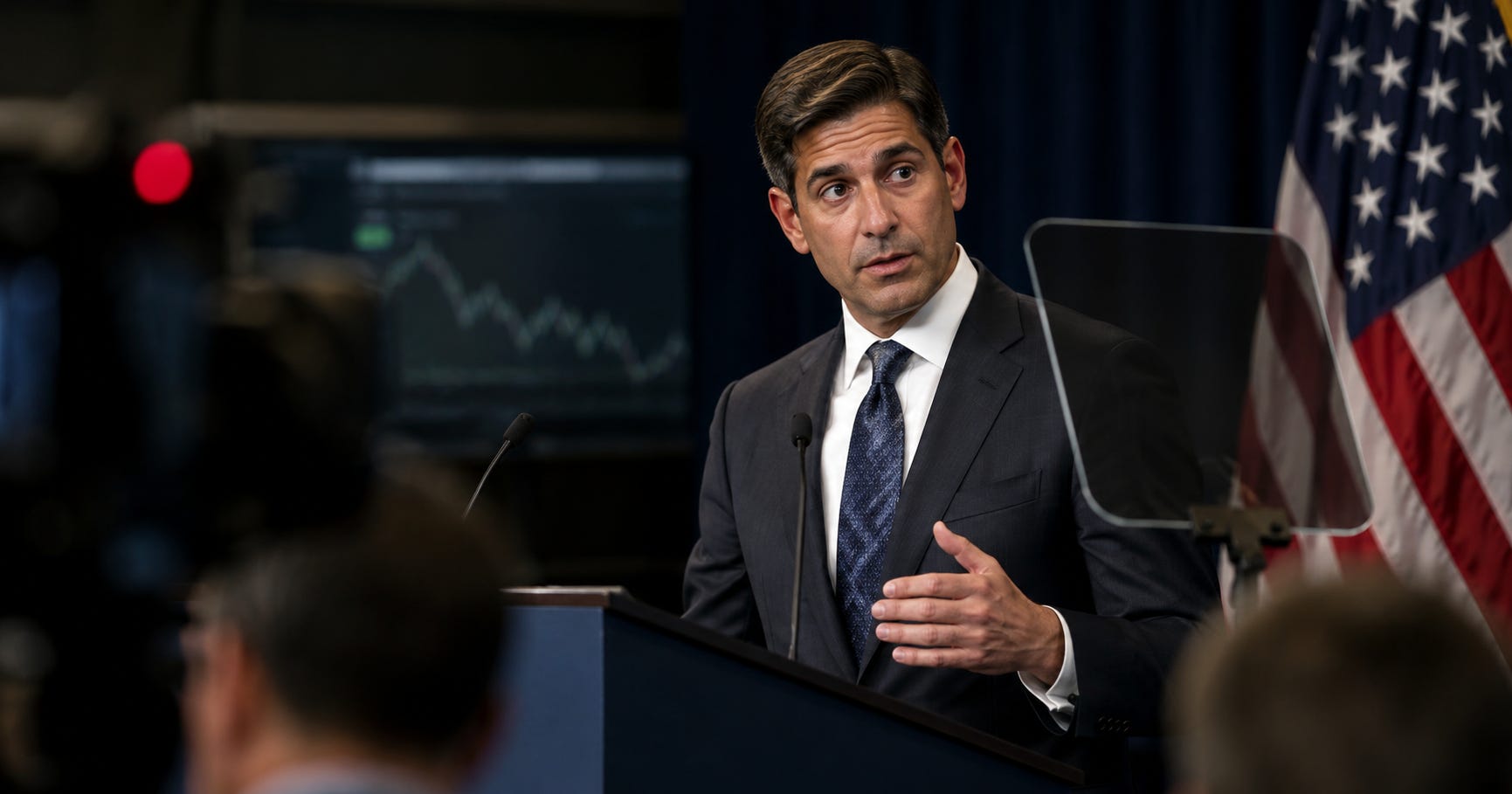
The FOMC decision on Wednesday June 17 broke the pattern of the past several meetings. The committee voted 12-0 to hold the federal funds rate at 3.50% to 3.75%. Nine of the 18 voting members project a rate hike before the end of 2026, with six projecting two 25-basis-point hikes. The median projection for year-end 2026 rose to 3.8% from 3.4% in March, and 17 of 18 officials judged the risks to their inflation forecast to be weighted to the upside. Warsh did not submit his own projection for the dot plot, and the FOMC statement was cut to 130 words from 341 in April, removing the prior easing-bias language entirely.
The diplomatic picture broke open again at the end of the week. Talks between the US and Iran were called off on Friday June 19 after intense fighting between Israel and Hezbollah in southern Lebanon. Iranian officials did not travel to Switzerland as planned, insisting that the fighting in Lebanon must stop before talks can take place. Israel and Hezbollah later agreed to renew their ceasefire, mediated by Qatar, the US, and Iran.
Oil moved lower across most of the week then partially recovered on Friday. Brent crude futures closed Friday at $80.57, with WTI at $77.54. Compared with Brent around $97 a month ago and the conflict peak above $130, the move to $80 reflects real progress. The Friday bounce shows the market is not yet convinced this holds.
2) AAIG’S PERSPECTIVE
The MOU getting signed matters, and the strait moving 12 million barrels per night matters more than any of the diplomatic statements made over the past four months. The threshold has changed from announcements about opening the strait to actual tankers passing through without being fired on. If that pattern holds through July, oil markets normalise in the hard data and the inflation pressure we have written about in recent pulses begins to ease.
Friday made clear that the structural risks have not gone away. The same problem that broke earlier rounds of negotiation, Israel striking Hezbollah while the US tries to negotiate with Iran on Lebanon, has now broken the first scheduled round of post-MOU talks. Iran’s position is consistent: it will not engage on nuclear questions while Israel continues operations in Lebanon. Israel’s position is also consistent: it will not stop operations against Hezbollah to accommodate a US-Iran deal. The framework signed on June 17 does not resolve that incompatibility. It defers it.
The most likely pattern over the next 60 days is probably the one we saw this week in miniature. The operational ceasefire holds for tankers, oil keeps flowing, but the diplomatic process around nuclear talks moves unevenly, with each Israel-Hezbollah flare-up causing Iran to delay or cancel a scheduled meeting. That can continue for weeks before it threatens the broader deal. The risk is that one of those flare-ups eventually triggers an Iranian response in the strait, and the operational picture deteriorates quickly.
On the Fed, Warsh’s first meeting was a clearer statement of intent than markets had expected. The dot plot flipping from one cut in 2026 to potentially two hikes, with 17 of 18 officials seeing inflation risks tilted to the upside, is a meaningful hawkish shift. The headline rate did not move, but the framework for thinking about where rates go next did. Warsh’s refusal to submit his own dot, and the much shorter statement, both fit his long-held criticisms of Fed forward guidance, and they also remove some of the guidance markets have relied on. Investors now have to make decisions about rate paths with less anchored signalling than at any point in the past decade.
There is a tension inside the meeting between Warsh’s personal disposition and the data. Warsh has called AI “structurally disinflationary” and told the Senate in April that “inflation is a choice.” He has dismissed core PCE as “a rough swag” and favoured trimmed-mean measures that have run closer to 2% than to the headline. That is the profile of a chair who wants room to cut. The data is not letting him, and the committee around him is moving in the opposite direction. Holding the line on a hawkish projection in his first meeting, rather than fighting his colleagues on it, signals that even a chair who wants to ease cannot do it against 4.2% headline CPI and a labour market that has not cracked.
The softer core CPI reading is the data point that gave Warsh some cover, but one month of softer core does not establish a trend. Energy is still pulling headline higher. The pass-through into services, shelter, and apparel that we wrote about after the April release moderated in May, but whether that moderation continues or May was noise around a still-elevated trend remains an open question. June and July data will answer it. If core CPI re-accelerates, Warsh’s hand becomes harder to play, and the nine dots projecting a hike start to look directional rather than precautionary.
On oil, the move to $80 Brent reflects the market beginning to price normalisation, though normalisation here does not mean a return to pre-war levels. Refinery damage, depleted inventories, and the lingering insurance premium will probably keep prices structurally higher for months. Downside scenarios that get to $70 or below require both a durable ceasefire and a rapid recovery of physical infrastructure, neither of which is in place yet. The base case from here is probably Brent in the $75 to $85 range through summer, with upside risks dominating if the Lebanon situation escalates again.
3) WHAT TO WATCH
Three things will shape the next two weeks, and they are tightly connected.
The first is whether the Geneva talks get rescheduled and actually held. The 60-day clock on the MOU started on June 17, which means the substantive nuclear negotiations have to make meaningful progress by mid-August. Every week lost to Israel-Hezbollah escalation is a week not spent on the harder questions. The signal to watch is whether Vance and the Iranian delegation actually meet face-to-face within two weeks. If they do, the framework is alive. If three weeks pass without a meeting, the process is in trouble.
The second is tanker transit counts through the strait. The Vance figure of 12 million barrels per night is the operational benchmark to measure against. If that pace holds, oil keeps drifting lower and inflation gets the relief it needs to break out of the trend we have flagged in previous pulses. If transit counts fall sharply in response to another Lebanon flare-up, the deal’s credibility erodes and oil moves back toward $90. Daily and weekly transit data has effectively become the leading economic indicator for the rest of the year.
The third is the June CPI release on Tuesday July 14, which is the first reading that will capture meaningful deal-related energy price relief if it holds. A headline reading materially below 4.2% with core staying around 2.9% would make the Fed’s hawkish lean from this meeting look less necessary, and Warsh would get room to soften his tone. A headline that stays elevated and a core that re-accelerates would make the dot plot’s hike projections feel directional rather than precautionary, and bond markets would reprice accordingly.
The thread this week is that the headline progress is real, the operational signs are good, but the structural fault line running through Israel-Hezbollah has not closed. We have a signed deal, an open strait, ships actually moving, and a Fed that has stopped pretending cuts are coming. We also have a diplomatic process that got postponed within four days of being signed because Israel cannot stop striking Lebanon. The next 60 days will determine whether the MOU consolidates into a real settlement or ends up as another framework that worked for as long as nobody pushed too hard against it.
Thanks for reading this 14th pulse, and see you at the next one!
AAIG is a research collective built on deep work, shared scrutiny, and quality over quantity. We treat research as a product, not content to fill a feed. By combining the expertise of multiple specialists, we find true edge where others just see noise. No hype, no daily trades. Just high-conviction ideas.
This is Asset Alliance Investment Group: Learn more on substack.com/@aaig
Disclaimer: The research and analysis published by Asset Alliance Investment Group is for informational purposes only and does not constitute financial, investment, or professional advice of any kind. All investment decisions carry risk, and recipients are strongly encouraged to seek independent, qualified financial advice before acting on any information contained herein.